






Prickly pear oil for skin: the lightest of our ancestral botanicals
A plant that thrives under stress, for skin that's under stress. Why prickly pear seed oil is in both Prep and Plump.

About us
 is hormone-informed skincare: skin longevity science for sensitive skin that keeps changing.

Samantha noticed it first. Prickly pear cactus was growing on the hillside in Prato, outside Florence, where she lives. She'd only ever known it as the precious oil in expensive French skincare, so she wondered: how is this growing here?
Then I started seeing it everywhere in LA. Walking my kids around the neighborhood, there it was, spilling over garden walls. It grows here too.
So we dug in. Prickly pear has been prized for centuries. In Mexico, the nopal cactus is on the national flag. In French pharmacies, its seed oil is one of the most expensive bottles on the shelf. A plant that thrives in the Tuscan hills, the California sun and the Mexican desert, and that so many cultures treasure? We had to have it in our formulas: a plant that thrives under stress, for skin that's under stress.
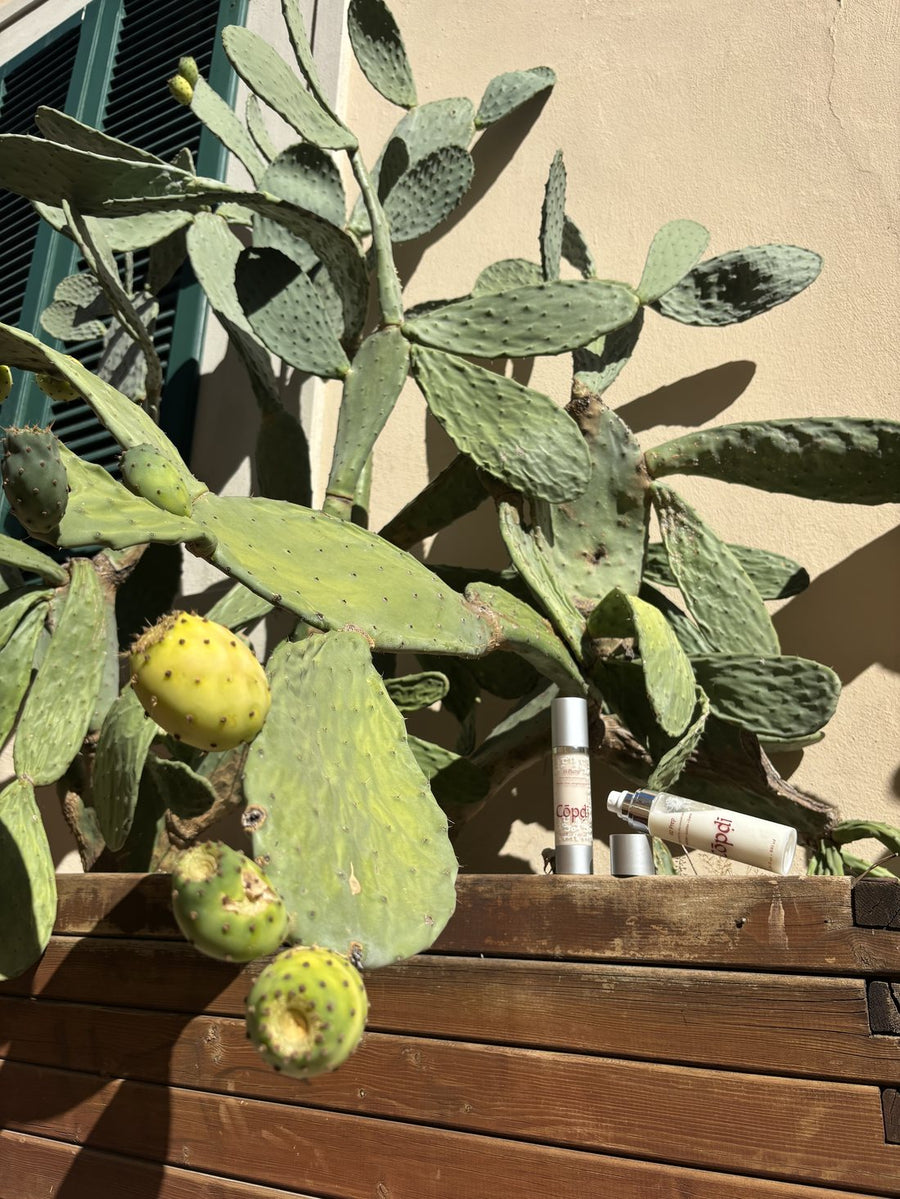
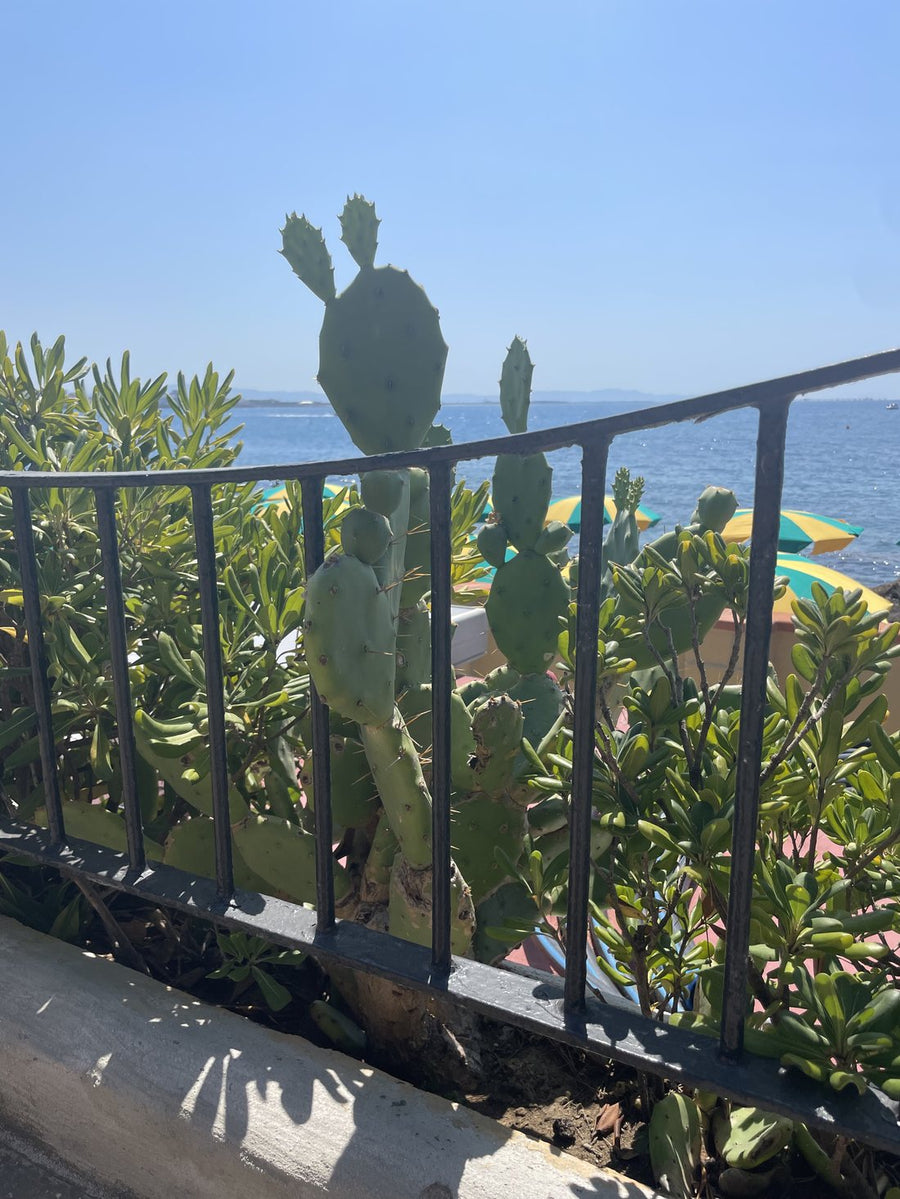
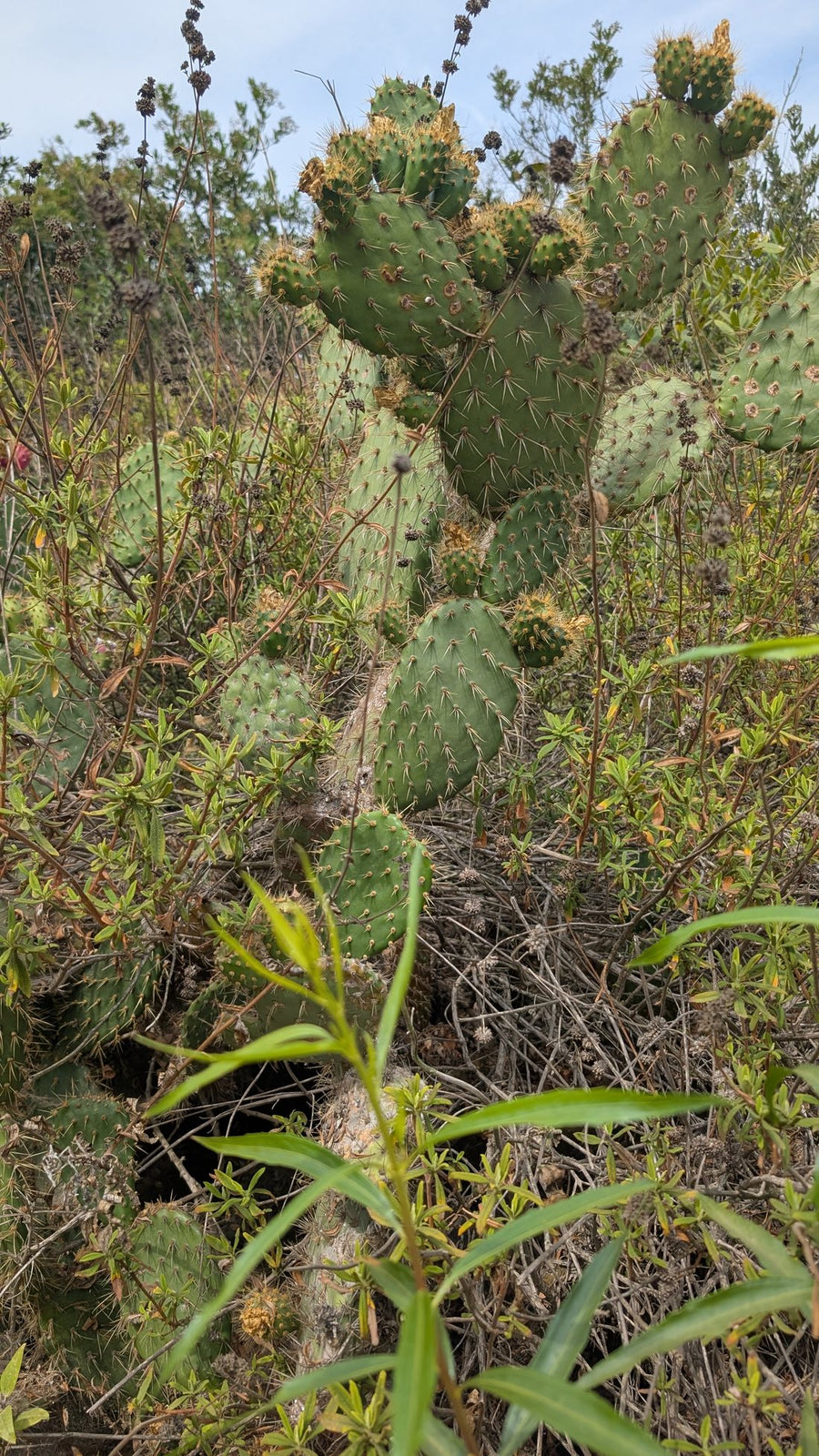
Here's why it earned its place in both Prep and Plump.
Why an oil at all
Your skin barrier is mostly fats, and when hormones shift, skin makes less of them. A water-based serum, even a great vitamin C serum, can't put those fats back. A light oil can. (We go deeper on this in our nigella article.)
Why prickly pear
It's the most linoleic-rich oil we use. Depending on where the cactus grew, linoleic acid makes up roughly 57 to 67% of the oil.1,2,3 Skin attaches linoleic acid to a special ceramide that helps lock its outer layer together and hold water in.4 Skin can't make it on its own.
It's light. Linoleic-led oils feel dry to the touch and suit skin that breaks out easily. Heavier, oleic-rich oils can loosen the barrier with constant use.5
It carries vitamin E and plant sterols. The oil is rich in tocopherols, mostly gamma-tocopherol, a form of vitamin E, and in phytosterols, mainly beta-sitosterol.1,2 Vitamin E is the skin's own main fat-soluble antioxidant.6
It's precious. The oil is pressed from the tiny, hard seeds inside the fruit, not from the fruit you eat, and the seeds give up only a small amount of oil.1,2 Ours is cold-pressed and unrefined.7
What it doesn't have
You'll read that prickly pear oil is full of betalains, the pigments that make the fruit magenta. Those pigments dissolve in water and stay in the fruit's flesh and skin.8 They don't come through into the seed oil. Its antioxidants are its vitamin E and sterols.
Prickly pear works as a pair with nigella in both Prep and Plump, as part of the barrier and antioxidant pillars of our hormone-informed philosophy.
With care,
Afsheen & Samantha
FAQ
What is prickly pear seed oil good for?
It is rich in linoleic acid, which skin uses to build its barrier, and in vitamin E and plant sterols. It is light and dry to the touch, which suits skin that is dry and breakout-prone at the same time.
Does prickly pear seed oil contain betalains?
No. Betalains are the water-soluble pigments that make the fruit magenta, and they stay in the fruit's flesh and skin. The seed oil's antioxidants are its vitamin E and sterols.
Isn't seed oil bad for you?
The concern is about refined cooking oils, extracted with heat and solvents and eaten in large amounts. Ours is cold-pressed and unrefined, used in small amounts on skin. Linoleic acid is a nutrient, not a hormone.
This article is for general information and isn't medical advice. For concerns about your skin or health, talk to your doctor or dermatologist.


